Country Balls: World Battle
- 4.7
- Rating
- 1.00M
- Installs
- Free
- Price
 Analysis by App-foxy
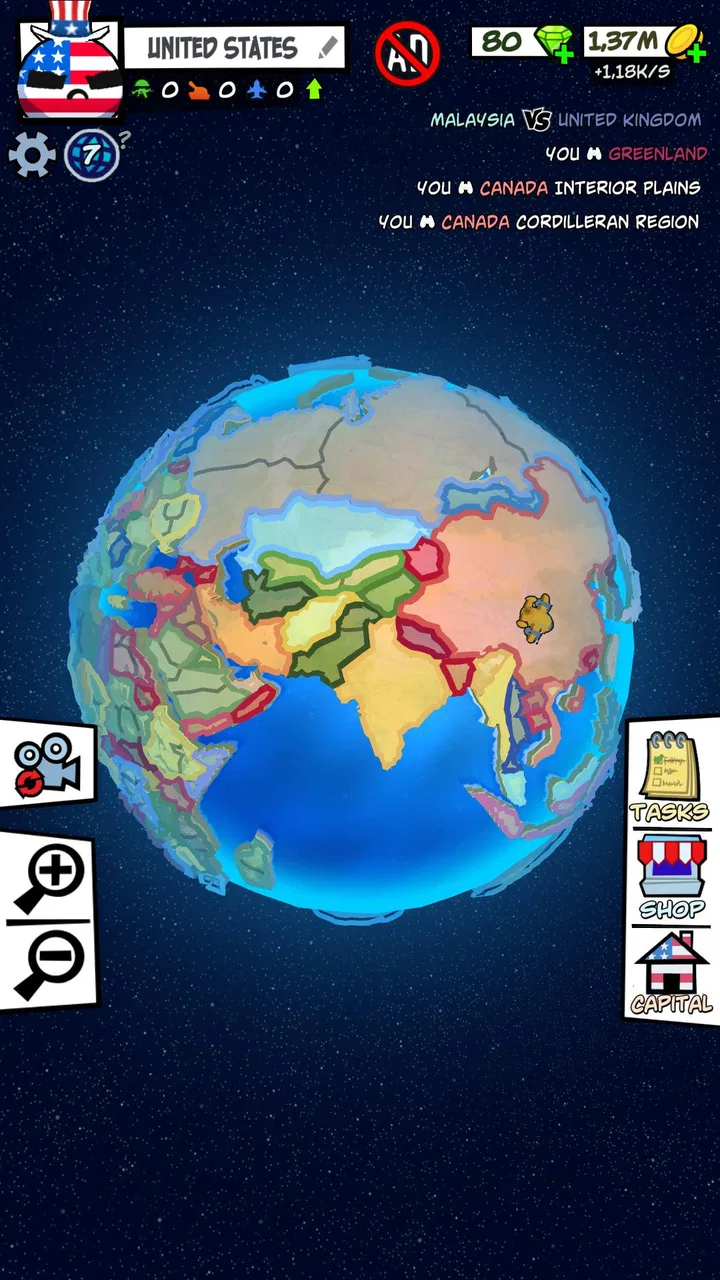
I first noticed Country Balls: World Battle because it looks lighter and more playful than many strategy games, but the battles still ask me to think before I act. The country-ball theme gives the game an easygoing surface, while the central challenge is about directing forces, choosing sensible tactics, and making decisions under pressure. That combination makes it approachable for a quick session without making every encounter feel automatic.
It is a free strategy game from MAD PIXEL GAMES LTD, available for players aged Everyone. The game has built a sizable audience, with over one million installs and a 4.6 average from around 44 thousand ratings. Those figures do not replace personal experience, but they do suggest that the simple visual style has found an audience beyond dedicated strategy fans.
I would describe it as a good fit for someone who wants strategy in short, readable bursts rather than a complicated simulation that requires a long tutorial or a notebook beside the phone. At the same time, it is not a perfect choice for every household or every player. The light presentation can make it seem almost toy-like, while the tactical decisions still reward patience. The best experience comes from treating it as a small decision-making game, not merely as a colorful distraction.
You May Also Like

 Blood Strike: 2.5 Anniversary
Blood Strike’s Loadouts Turn Every Drop Into a Tactical Gamble
A close look at Blood Strike’s custom loadouts: how fast access to signature weapons reshapes its battle royale rhythm, rewards preparation, and narrows the gap between fights.

 Pandora - Music & Podcasts
Pandora’s Music Is Easy to Start, but Harder to Recover
Pandora’s strength is its low-effort path from a seed to a station. Its weak spot is how much confidence it asks you to place in connection, setup, and quiet recovery.

 8 Ball Pool
 Is Built on Rivalries, Rematches, and Routine
A close look at the rivalries, rematches, shared routines, and unanswered safety questions that turn a quick pool match into a persistent mobile community.

 Samsung Music
’s Quiet Strength Is Playing What You Already Own
Its reach comes less from spectacle than from dependable access to a personal library. That simplicity is both the app’s strongest retention engine and its ceiling.

 AccuWeather: Weather Radar
AccuWeather Review: A Quick, Clear Forecast for Everyday Decisions
For everyday plans, the best forecast is the one you can understand quickly. AccuWeather makes rain timing, radar, and local conditions easy to act on, with a few trade-offs.

 Hill Climb Racing
Why Hill Climb Racing Still Turns Crashes Into One More Run
A tiny car, a bumpy hill and one more upgrade: Hill Climb Racing keeps resurfacing because its simple chaos makes every near-miss feel personal.
More From Our News Desk



How it works when a phone is shared
When a phone is shared, I think the key question is less about who gets a turn and more about how everyone treats the current run. I’d agree on who makes the final call before passing the device, so advice stays helpful rather than turning into competing instructions. That small boundary makes it easier to enjoy the game together and sets up a closer look at how its tactical learning curve affects group play.
A natural game for passing between people
Country Balls: World Battle works particularly well in a shared-device setting because its appeal is easy to understand at a glance. One person can begin a battle, explain the immediate objective, and hand the phone to someone else without needing a long explanation of the fictional world. The country-ball presentation also makes the game less intimidating for a relative or younger player who might normally avoid a serious-looking war strategy title.
In my experience, this kind of game is most enjoyable when players discuss the next move rather than simply taking turns without a plan. A parent and child might look at the battlefield together and debate whether to act aggressively or preserve strength for a later moment. Two friends can compare how they approach the same kind of conflict: one may prefer quick pressure, while another waits for a safer opening. The game gives those conversations a clear focus because every decision is tied to the current battle.
That shared use also exposes one of the game’s practical limits. A phone passed around a household is still one device, so the experience is better for discussion and occasional handoffs than for independent long-term progress by several people. I would not treat it as a replacement for separate profiles or a dedicated multiplayer experience. If everyone wants a completely private campaign, a shared screen can become inconvenient very quickly.
Keeping sessions easy to understand
The cleanest way to use it together is to establish a simple routine. The person holding the phone explains what is happening, identifies the immediate problem, and says what they intend to try before tapping through the action. That small pause turns the game into a strategy conversation instead of a sequence of unexplained touches. It also helps a less experienced player learn why a move matters.
I found that this approach is more useful than giving constant instructions. The game’s charm comes from seeing whether a decision works, so I prefer to let another player make a reasonable mistake and then discuss the result. That makes the country-ball theme feel like a friendly entry point into tactical thinking rather than decoration placed over an entirely automatic game.
For a short household session, I would use the game after dinner, during a wait, or while sitting together with one person playing and another advising. It is less suitable when several people need to play simultaneously or when the phone must remain available for other tasks. The distinction matters: this is a shared-screen conversation game, not something I would choose as the main activity for a large group.
What to decide before installing
The game is free to download, which makes trying it on a shared device straightforward. However, it includes in-app purchases ranging from $0.99 to $20.99 per item. That is the detail I would discuss before letting a child or another family member play on a device connected to a payment method. The presence of purchases does not make the game unsuitable, but it does mean that “free” should be understood as the entry price rather than a promise that every optional transaction is irrelevant.
I would make the household rule clear before the first session: play the free portion first, and ask before spending anything. That conversation is more practical than assuming the colorful art will prevent accidental decisions. It also avoids a common problem with shared devices, where one person thinks a purchase is harmless while the account holder sees it later as an unexpected charge.
Because the game is listed for Everyone, I can comfortably consider it for a broad age range from a content perspective. Still, an Everyone label does not answer every household question. It does not tell me how a particular child will respond to conflict-themed play, how much guidance they need with strategy, or whether they understand optional spending. Those are family decisions, and I would base them on the individual player rather than the label alone.
Account boundaries matter more than the cartoon style
When I use a shared phone, I separate the question of suitability from the question of ownership. The game may be appropriate for several people to try, but progress, settings, and purchases still belong to the device and account environment in which it is used. I would avoid treating a casual handoff as if it created a separate personal space for every player.
That is especially important if one person wants to experiment freely while another cares about preserving a particular run. Before passing the phone around, I would agree on who starts the session and whether others are allowed to change the current plan. This sounds minor, but strategy games become frustrating when a carefully prepared situation is altered by someone who was only trying to look around.
I also prefer using a household device with a clear owner rather than moving the game casually between several accounts. The practical benefit is simple: everyone knows which device holds the current experience, and the person responsible for purchases knows where to check before approving anything. I would not promise that the game provides family profiles or special household controls, so I would rely on the device owner’s normal supervision and payment settings.
Coordination, tactics, and the real learning curve
I find coordination works best when players explain one intended move and then give it room to play out, instead of trying to steer every tap. That approach helps newcomers notice the connection between a choice and its result, while experienced players can still offer useful perspective without taking over. It also makes the learning curve feel like shared problem-solving, which is worth considering before deciding whether this game suits your group.
The strongest part is deciding when not to rush
The store summary presents the game as a test of command, cunning, and strategy, and that is a fair description of its central appeal. What I enjoy most is the tension between acting immediately and waiting for a more favorable moment. A fast move can feel satisfying, but a rushed decision may leave fewer good options later. The game becomes more interesting when I stop asking only, “What can I do now?” and start asking, “What will this choice make possible afterward?”
That is also where the game can teach useful habits to a new strategy player. I encourage someone learning it to identify the current threat, choose one priority, and avoid changing plans every few seconds. In a shared session, this gives everyone a role in the discussion. One person can point out danger, another can suggest a response, and the player can decide which idea to test.
A non-obvious advantage of the country-ball presentation is that it lowers the emotional weight of mistakes. Losing a battle feels less severe when the visual language is playful, so I am more willing to try a different approach instead of repeating the same safe move. That makes it a better introduction to tactical thinking than a grim, highly technical war game for players who are still learning how to read a battlefield.
A useful household workflow
For a family or shared group, I would use three short stages. First, look at the situation without touching anything. Second, say the intended plan aloud. Third, review what changed after the action. This workflow sounds obvious, but it prevents the most common shared-device problem: several people giving instructions at once while the player taps under pressure.
The review stage is particularly valuable. If a plan fails, I would ask whether the idea was wrong or simply mistimed. If it succeeds, I would still ask what made it work. That turns a quick game into a small exercise in cause and effect. It also helps children understand that strategy is not just about finding a powerful action; it is about connecting a choice to a result.
I would not force this method on someone who only wants a casual game. The same structure that makes the title educational can make it feel overly serious if every move becomes a family lesson. My recommendation is to use the discussion when players are interested, then step back and let them enjoy a few battles without commentary.
Where it differs from usual strategy alternatives
Compared with a traditional grand-strategy game, this title is easier to approach and less demanding in presentation. I do not need to begin with a large historical system, a dense map, or a long list of unfamiliar terms. That makes it a sensible choice for a first strategy game or for a player who wants a lighter session on a phone.
Compared with a purely casual puzzle game, however, it asks for more commitment from the player. The country balls may look humorous, but the game still expects me to consider consequences and use tactics rather than simply match shapes or wait for a timer. Someone seeking instant, nearly mindless entertainment may find the decision-making more involved than expected.
It also differs from a competitive online strategy experience in the way I approach it. I would choose this game when I want to think at my own pace or discuss a move with someone beside me, not when I need a deep social system built around live opponents. If your priority is a large community, elaborate alliance management, or a long-running competitive identity, another strategy game may serve you better.
What can become frustrating
The playful theme cannot remove the usual friction of mobile strategy. A player who dislikes repeating a failed approach may lose interest, especially if the early novelty of the country balls is not enough to carry the decision-making. The game is also not ideal for someone who wants a highly detailed simulation with extensive control over every military variable. Its appeal comes from making strategy approachable, not from modeling every part of a conflict.
In a household, the biggest friction may be interruption. A short session can be convenient, but it can also make it tempting to hand the phone to someone else before a plan is complete. I recommend agreeing on a natural stopping point instead of interrupting in the middle of a decision. That small habit protects both the player’s concentration and the shared experience.
The purchase range is another reason I would keep expectations clear. Players who dislike any in-app transaction may prefer a paid game with a single upfront cost, even though the initial download here is free. On the other hand, someone who wants to sample a strategy game before committing money may appreciate being able to start without paying. The right choice depends on whether flexibility or a completely fixed cost matters more to you.
Age, trust, and supervision
The Everyone rating makes the game easier to recommend across a household, but I would still introduce it differently to different players. With a younger child, I would play the first session together and explain that the country-ball characters are fictional game pieces rather than a lesson in real-world politics. With an older player, I would focus more on planning, trade-offs, and whether the game’s pace suits their taste.
Trust is also connected to spending, not just content. I would let a child play independently only after making the purchase rule explicit and confirming that the device owner is comfortable with the arrangement. If the phone belongs to a parent, sibling, or partner, the owner should remain the person who decides whether any transaction is allowed.
For adults sharing a device, the same principle applies in a different way. A partner may enjoy experimenting, while another person may care about keeping a particular run intact. Clear boundaries prevent small disagreements: decide whether the game is a communal activity, an individual activity on a shared phone, or a mixture of both. The game itself can support conversation, but it cannot replace that agreement.
Technical fit and the current build
The game supports Android 7.0 and later, so compatibility is broad enough for many older Android phones and tablets. I would still consider the actual device experience before choosing it for a shared household screen. Strategy games are easier to enjoy when everyone can see the battlefield clearly and the phone is comfortable to hold, especially if several people are watching one player make decisions.
The current version is 1.7.2. For a new installation, I would use the latest available build rather than relying on an old copy already sitting on a device. That is simply the safest way to encounter the game as it is currently maintained, and it avoids judging the present experience through outdated behavior.
The game was released on September 20, 2024, which places it in a relatively recent part of the mobile strategy landscape. I would not choose it because of its release date alone, but the timing helps explain why it feels designed for modern phone play: a clear theme, accessible presentation, and sessions that can fit around everyday interruptions.
Who should play it and who should skip it
I recommend it to players who like the idea of strategy but do not want a severe or intimidating presentation. It is especially suitable for a household that enjoys talking through decisions, for a parent looking for a game to explore with a child, or for friends who want to compare approaches on one phone. The cartoon style is a strong advantage when introducing someone to tactical games.
I would be more cautious about recommending it to a player who wants deep historical accuracy, extensive customization, or a serious competitive ecosystem. I would also suggest skipping it if you are uncomfortable with in-app purchases in any form and do not want to manage them through the device owner’s rules. A fixed-price strategy game may be a better match in that situation.
It is not the right household choice when several people need separate progress at the same time. The game can encourage coordination, but shared access is not the same as independent account boundaries. If privacy, separate saves, or individual ownership are central requirements, I would choose a title and device arrangement built around those needs instead.
My household verdict
After spending time with it, I see Country Balls: World Battle as a friendly doorway into mobile strategy rather than a replacement for the most sophisticated games in the genre. Its best quality is the way it makes tactical discussion feel approachable. The country-ball characters invite people to look over the same screen, suggest a plan, and learn from the result without the atmosphere becoming too heavy.
For shared use, I would install it on one clearly owned device, agree on who controls the session, and set a firm rule about the optional purchases before anyone begins. I would start with a short supervised session for younger players, then decide whether independent play feels appropriate. Those boundaries do more to create a good experience than simply relying on the Everyone label.
The final trade-off is straightforward: you get a free, accessible strategy game with a playful identity, but you should accept that it is lighter than a full simulation and that optional spending requires attention. If that balance suits you, I think it is worth trying. My recommendation is strongest for households that enjoy planning together, not for players who need private progress or a deeply realistic war system.
FAQs for Country Balls: World Battle
01What is the main objective of Country Balls: World Battle?
In Country Balls: World Battle, the primary goal is to lead your country ball to victory by participating in strategic battles against other country balls. Players must utilize their strategic skills to navigate challenges, conquer territories, and ultimately dominate the leaderboard. Each victory earns rewards that enhance game performance.
02Is Country Balls: World Battle free to play?
Yes, Country Balls: World Battle is free to download and play. However, the game offers in-app purchases that can enhance your gaming experience by providing additional resources, characters, or power-ups. These purchases are optional and not necessary to enjoy the full game experience.
03What are the key features of Country Balls: World Battle?
Country Balls: World Battle includes features such as strategic gameplay, diverse country balls with unique abilities, multiplayer battles, and regular updates with new content. The game also allows players to form alliances, participate in global events, and compete on leaderboards for rewards and recognition.
04Can I play Country Balls: World Battle offline?
Country Balls: World Battle primarily requires an internet connection for most features, especially for multiplayer battles and events. Some basic levels or tutorials might be available offline, but to fully enjoy the game and its competitive elements, a stable internet connection is recommended.
05What devices are compatible with Country Balls: World Battle?
Country Balls: World Battle is available on both Android and iOS platforms. It requires a device running at least Android 5.0 or iOS 10.0. It is compatible with most modern smartphones and tablets, but for optimal performance, using a device with updated software and adequate system resources is advisable.
Pros
- Engaging and colorful graphics.
- Simple
- intuitive controls.
- Variety of levels and challenges.
- Frequent updates with new content.
- Multiplayer mode for added fun.
Cons
- In-app purchases can be pricey.
- Occasional ad interruptions.
- Requires internet for multiplayer.
- Limited offline content.
- Some levels can be repetitive.

Country Balls: World Battle
Gallery